Kindergarten Readiness Checklist: 24 Skills to Practice at Home (Free Printable)
Is my child ready for kindergarten? If you are asking this question, you are not alone. Many parents start to wonder about it a year before school begins. The good news: kindergarten readiness is not about reading early or writing perfect letters. It is about a group of everyday skills that help a child feel calm and confident in a classroom.
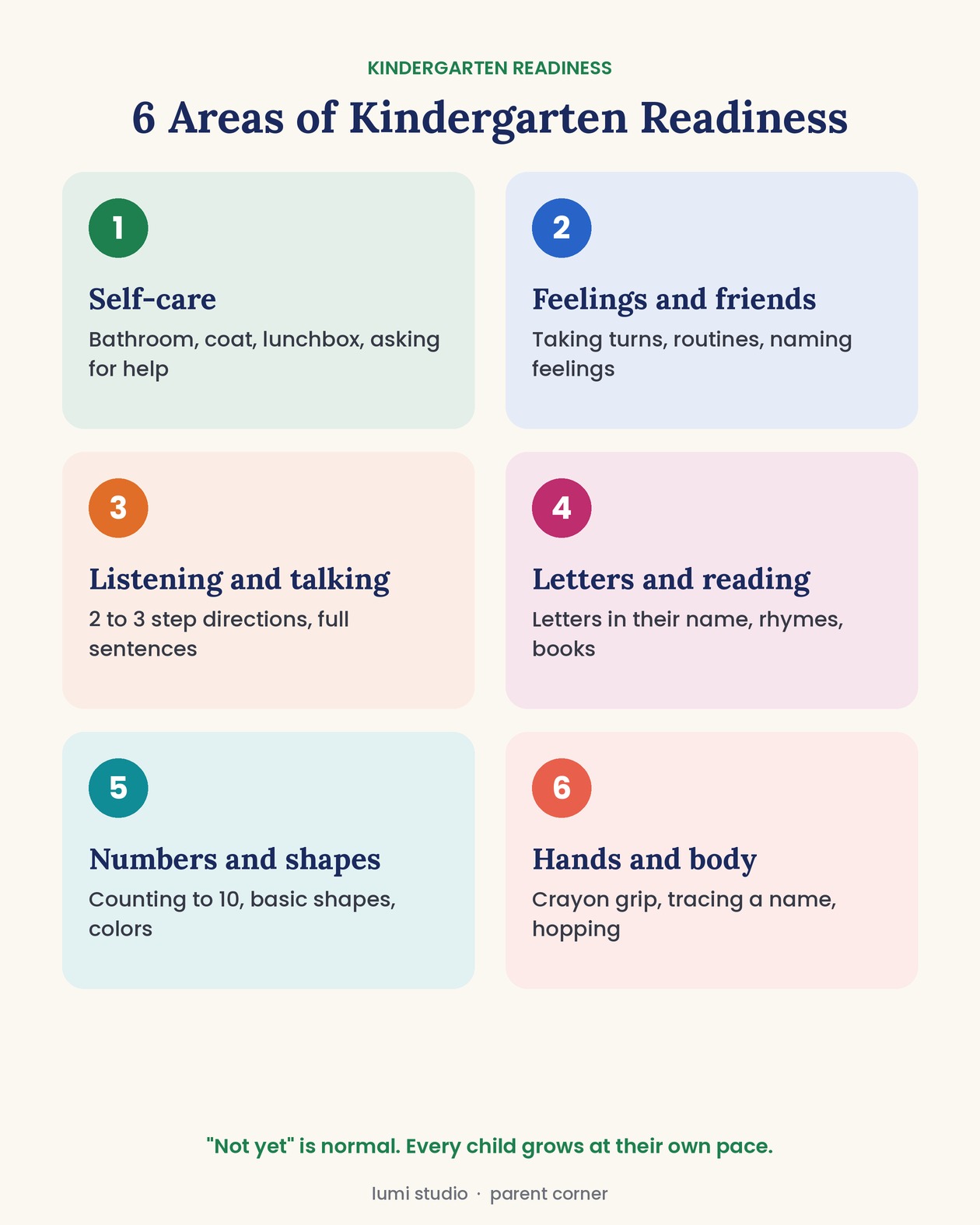
Below is a simple kindergarten readiness checklist with 24 skills in six areas. You can also download it free as a printable PDF (US Letter and A4) and tick each skill with your child.
What does "kindergarten ready" really mean?
Teachers often say that the most helpful skills are not academic. A child who can take turns, ask for help, open a lunchbox and listen to a short story will settle into kindergarten much more easily. Letters and numbers matter too, but they grow fast once a child feels safe and curious.
Every child grows at their own pace. A "not yet" on this list is normal, especially for younger 4 year olds. Use it as a friendly guide, not a test.
The 24-skill kindergarten readiness checklist
1. Self-care
- Uses the bathroom on their own and washes hands
- Puts on a coat and shoes, tries zippers
- Opens a lunchbox and snack containers
- Asks a grown-up for help when needed
2. Feelings and friends
- Takes turns and shares with other children
- Follows simple daily routines
- Stays with a teacher or sitter for a few hours
- Names feelings like happy, sad and angry
3. Listening and talking
- Follows directions with two or three steps
- Speaks in full sentences
- Listens to a short story and talks about it
- Says their first and last name
4. Letters and reading
- Knows some letters, especially in their name
- Knows we read from left to right
- Hears words that rhyme, like cat and hat
- Holds a book and turns the pages one by one
5. Numbers and shapes
- Counts out loud to 10 or higher
- Counts up to 10 objects, touching each one
- Knows the numbers 1 to 10
- Names basic shapes and colors
6. Hands and body
- Holds a crayon with fingers, not a fist
- Writes or traces their first name
- Uses child-safe scissors with a grown-up
- Runs, jumps and hops on one foot
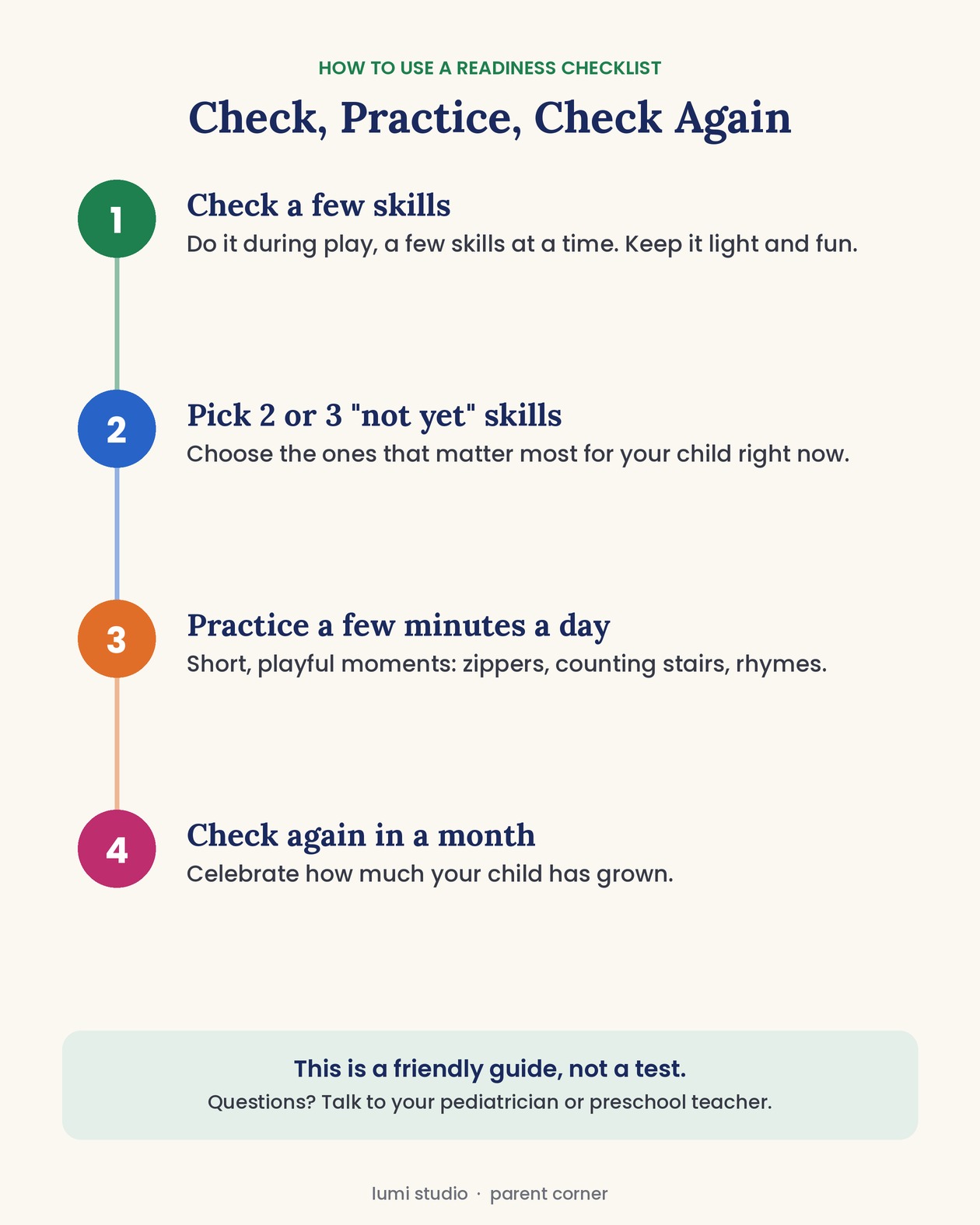
How to use the checklist
- Check a few skills at a time, during play. Keep it light and fun.
- Pick 2 or 3 "not yet" skills and practice them for a few minutes a day.
- Check again in a month. You will be surprised how much your child has grown.
Easy ways to practice at home
Self-care: Let your child pack and open their own snack box at the park. Practice zippers on a big coat first, then on a backpack.
Feelings: Name feelings out loud during the day: "You look proud!" "That made you frustrated." Feelings picture cards make this easier for little ones. Our Feelings and Calm Down Cards were made for exactly this.
Listening: Play "Simon Says" with two-step directions: "Touch your nose, then jump."
Letters: Start with the letters in your child's name. Find them on cereal boxes, signs and books.
Numbers: Count real things: stairs, apples, toy cars. Touch each one as you count.
Hands: Play dough, stickers, tearing paper and coloring all build the hand strength children need for writing.
Want a ready plan instead of planning yourself?
If you would like a simple, step-by-step plan, our Preschool Skills Assessment helps you see where your child is today, and our month-by-month Preschool Curriculum gives you print-and-go pages for about 15 minutes a day: letters, numbers, colors, shapes, fine motor and movement games.
Start small. A few minutes of playful practice each day is enough.
Download the free Kindergarten Readiness Checklist here.
Sources and further reading
This article shares general information for parents. It is not medical advice and does not replace advice from your pediatrician or another qualified professional. Every child develops at their own pace. If you have concerns about your child, please talk to your child's doctor.